
Skip to searchSkip to main content

Propulsion System for Engineers

This course focuses on the principles, design, and performance of systems that generate thrust to move aircraft, spacecraft, and vehicles. It covers jet, rocket, and electric propulsion, thermodynamics, fluid mechanics, efficiency, and real-world engineering applications in aerospace and related fields.
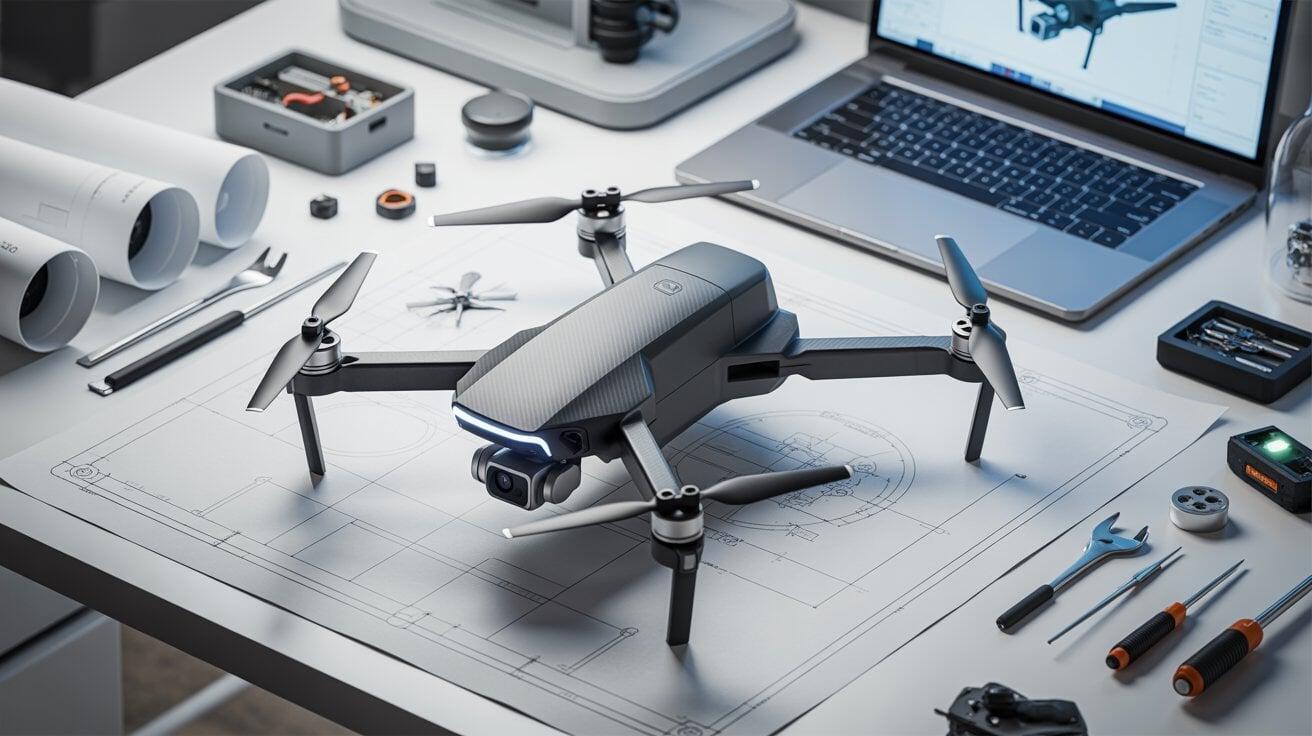
Course Outcome

This course is designed to equip students to understand the fundamental principles of propulsion systems and how thrust is generated. Students will be able to analyze the performance of IC engine, air-breathing, and rocket propulsion systems using thermodynamics and fluid mechanics. Students will learn to evaluate efficiency, limitations, and environmental impacts, and apply this knowledge to solve real-world aerospace propulsion engineering problems.

Pedagogical Approaches

Animated content, 3D Simulations, and Video lecture integrations

Prerequisite Subjects

Thermodynamics

​Explore the topics

Syllabus
Immersive Learning
Frequently Asked Questions
Test Your Knowledge
Reference
Syllabus
Propulsion for Engineers — Syllabus Timeline

Module 1: Basic Thermodynamics

Module 2: IC Engines

Module 3:Aerothermodynamics of aircraft engines

Module 4: Centrifugal compressor

Module 5: Axial Compressor

Module 6: Module 6: Combustion Theory of Airbreathing Engine

Module 7: Module 7: Rockets Science

Module 8: Multi-staging Rocket

Immersive Learning
Basic Thermodynamics by Dr Aishwarya Dhara
IC Engines by Dr Aishwarya Dhara
Centrifugal compressor by Dr Aishwarya Dhara
Axial Compressor by Dr Aishwarya Dhara
Rockets Propulsion by Dr Aishwarya Dhara
Multi-staging Rocket by Dr Aishwarya Dhara
Ukrainian UAV FP-1 
BAYRAKTAR TB3 UAV
Orion UAV
MQ-9 Reaper
Frequently Asked Questions
Frequently Asked Question on UAV by Dr Aishwarya Dhara
UAV Knowledge Chatbot
Test Your Knowledge
Constructed using the free cross word generator from Amuse Labs
Constructed by Academy Innova World with the wordsearch creator from Amuse Labs
UAV Fundamentals — 20 MCQ Quiz

UAV Fundamentals — 20 MCQ Quiz

Select one answer for each question. Your score will be shown out of 20. After submission the correct answer will be highlighted with a green border.

1. What is the main difference between a UAV and a UAS?

2. Which classification corresponds to HALE?

3. Why are UAVs preferred for dangerous missions?

4. What is wing loading?

5. Which factor most directly affects endurance for electric UAVs?

6. What is the purpose of an airfoil selection?

7. Higher aspect ratio wings result in?

8. What does IMU measure?

9. Which guidance law is based on line-of-sight rate for intercepts?

10. What is the main advantage of fixed-wing UAVs compared to rotary-wing?

11. What is payload fraction?

12. Which sensor fusion technique is commonly used for optimal estimation?

13. Why is redundancy used in critical systems?

14. What creates a stall?

15. Which is a common recovery method in confined areas?

16. Why are composites used in UAV structures?

17. What is the role of a gimbal on a camera payload?

18. Which is more suitable for long-endurance missions (electric vs IC engine)?

19. What is RTH (Return-to-home)?

20. What is a key cause of navigation INS drift?

Score: - / 20

After submission the correct options will be shown with a green border. Incorrect selections (if any) will be shown with a red border.

Reference
1. Austin, Reg. Unmanned aircraft systems: UAVS design, development and deployment. John Wiley & Sons, 2011.
2. Fahlstrom, Paul G., Thomas J. Gleason, and Mohammad H. Sadraey. Introduction to UAV systems. John Wiley & Sons, 2022.
3. Sadraey, Mohammad. "Unmanned aircraft design." A review of fundamentals, Morgan & Claypool Publishers (2017).
4. Kim, Gyou Beom, et al. "Design and development of a class of rotorcraft-based UAV." International Journal of Advanced Robotic Systems 10.2 (2013): 131.
5. Bappy, A. M., et al. Design and development of unmanned aerial vehicle (Drone) for civil applications. Diss. BRAC University, 2015.

Back
Home