
Best viewed on tablet, laptop, or desktop. For mobile access, please enable Desktop Mode.
UAV operations are commonly classified according to the level of visual contact maintained between the operator and the drone:
- VLOS (Visual Line of Sight): The pilot must directly see the UAV at all times without technological visual aids beyond standard corrective lenses.
- ELOS / EVLOS (Extended Visual Line of Sight): Additional observers or support systems help extend situational awareness beyond the pilot’s immediate view.
- BVLOS (Beyond Visual Line of Sight): The UAV flies outside direct visual observation and depends on telemetry, navigation systems, communication links, and detect-and-avoid capabilities.
In real UAV operations, buildings, terrain, atmospheric conditions, and distance may limit visual awareness. Therefore, understanding these operational modes is essential for flight safety, regulatory compliance, and mission planning.
- Open the simulation dashboard in a browser.
- Click Show VLOS Demo to observe a drone operating within the pilot’s direct visual range.
- Click Show ELOS Demo to observe how an external observer and escort aircraft help extend operational visibility.
- Click Show City BVLOS Demo to study how urban obstacles block direct line of sight.
- Click Show Far BVLOS Demo to observe long-range UAV operation outside direct human visibility.
- Use Reset to restore the initial condition and repeat the experiment.
The animated lines in the simulation represent communication, visibility, or blocked line-of-sight relationships among the pilot, observer, UAV, and support aircraft.
UAV Visual Line of Sight Simulation
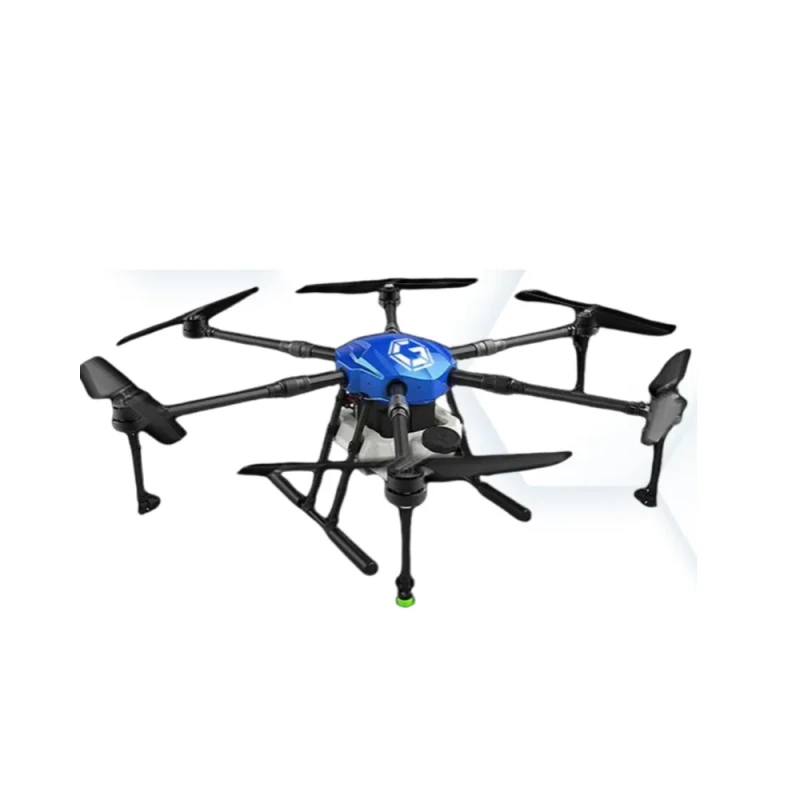

Initial state. Select a demonstration.
| Feature | Who sees the drone? | Visual Aids | Typical Range | Endurance | Operational Range | Best Use Case |
|---|---|---|---|---|---|---|
| VLOS | The Remote Pilot | Corrective lenses only | ~500 metres | 0.3–2 hours | 0–5 km | Training, inspection, hobby |
| EVLOS / ELOS | A Visual Observer | Observers use radio | Extended by observers | 2–10 hours | 5–50 km | Industrial monitoring, corridor tracking |
| BVLOS | No one (instrument-only) | Sensors, GPS, & DAA | Tens of kilometres | 10+ hours | 50+ km | Delivery, surveillance, long-range missions |
- In VLOS, the UAV remains visible to the pilot, allowing direct situational control.
- In ELOS, an observer extends visibility and supports safer operations over a wider range.
- In City BVLOS, tall structures obstruct direct vision, creating blind zones.
- In Far BVLOS, the UAV cannot be seen by the pilot and must rely on remote systems.
- The simulation demonstrates that increasing distance and physical obstacles reduce direct pilot awareness.
This simulation can be used in UAV education, aviation training, defense technology demonstrations, drone certification modules, and interactive classroom learning.
- Differentiate between VLOS, ELOS/EVLOS, and BVLOS UAV operation modes.
- Explain how visual range affects pilot situational awareness and mission safety.
- Understand the role of observers and support aircraft in extending operational visibility.
- Recognize how buildings and distance can create operational limitations.
- Apply the concept to UAV regulations, mission design, surveillance, and remote operations.
Best viewed on tablet, laptop, or desktop. For mobile access, please enable Desktop Mode.
- Takeoff
- Navigation
- Obstacle detection
- Mission execution
- Landing
- Drone movement
- Nearby obstacles
- Other aircraft or birds
- Unexpected behavior
- VLOS: Pilot directly sees the UAV
- BVLOS: Pilot depends on sensors, telemetry, communication links, and automation
- Drone position
- Nearby hazards
- Airspace conflicts
- Emergency situations
- GPS/GNSS navigation
- Telemetry systems
- Long-range communication links
- Autopilot / flight controller
- Failsafe logic
- Obstacle detection systems
- Return-to-home system
- Redundant power and communication systems
- Waypoints
- GPS data
- IMU sensors
- Obstacle sensors
- Navigation algorithms
- Surveying
- Mapping
- Agriculture
- Inspection
- Surveillance
- Battery becomes low
- Signal is lost
- Mission ends
- Failsafe is activated
- Flight control
- Telemetry updates
- Video/data transmission
- Emergency override
- GPS
- Gyroscope
- Accelerometer
- Magnetometer
- Barometer
- Obstacle sensors
- Long-distance inspection
- Powerline and pipeline monitoring
- Large-area surveying
- Agricultural monitoring
- Disaster response
- Logistics and delivery
- Border surveillance
- Higher repeatability
- Reduced pilot workload
- Improved mission efficiency
- Better route accuracy
- Capability for complex operations
- IMU
- Compass
- Vision sensors
- Inertial estimation
- Pre-programmed logic
- Waypoint paths
- Sensor-based feedback control
- Obstacle sensing
- Airspace awareness
- Failsafe routing
- Emergency logic
- Navigation corrections
- Unexpected obstacles
- Environmental disturbances
- Failsafe decisions
- Hover
- Return-to-home
- Land automatically
- Continue mission under predefined logic
- Mission planning
- Safety monitoring
- Emergency intervention
- Regulatory compliance
“VLOS means the drone remains directly visible to the pilot, EVLOS extends visibility using observers, BVLOS allows operation beyond direct sight using advanced systems, and autonomous UAVs can perform missions with minimal human control.”
Quick Viva Trick:
- VLOS = Pilot sees the drone
- EVLOS = Observer helps see the drone
- BVLOS = Systems help control the drone beyond sight
- Autonomous = Drone can think/act based on programming and sensors